
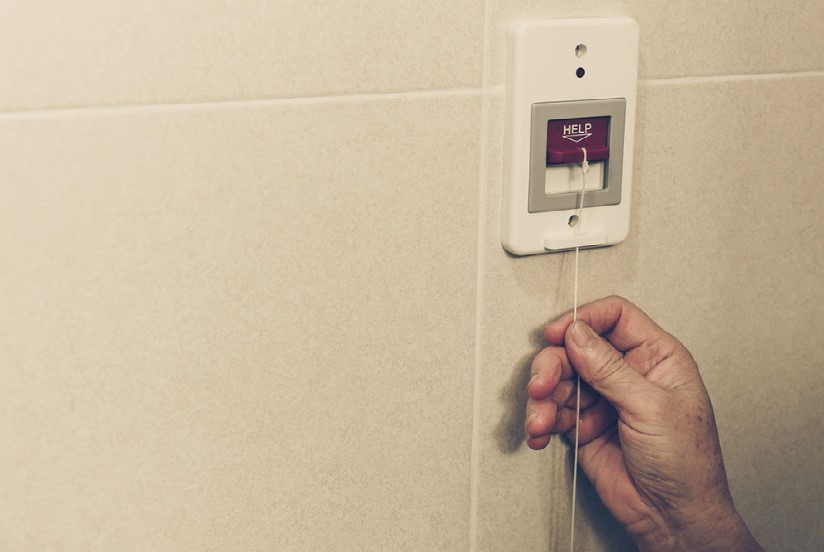
One of the things that we hear from families that they find the most frustrating is that their mom or dad pushes the button and it takes forever for someone to actually answer that call. This can be a big deal especially if they need assistance with the bathroom and they have to wait. This isn’t just an issue in senior living communities, it’s also something we hear happening in the skilled nursing setting. We’ve actually had families tell us that a staff member told their mom or dad to just go ahead and go to the bathroom in their Depends. I can’t even imagine what I would be thinking if someone said that to me! If you don’t know what Depends are…well I’ll let you google that but let me just say it’s a total dignity issue!
So today we’re going to talk about the call system, how they differ in each setting and what you can do to help make it more successful.
If you’ve ever toured an assisted living community or adult family home also known as a residential care home then I’m sure they talked about their call system. So let’s start with assisted living.
Almost all assisted living communities have an actual pendant that the resident wears, and in addition to that may have buttons or pull cords on the bathroom wall, the living room and bedroom. Most of the time you’re seeing those pull cord systems because those are just older systems and it’s a system that some communities still have but they may use it with the pendant or you might be touring a community and see that pull cord but they no longer use it.
Now… one of the most common questions families all about the pull cord system is …how is that going to help my mom if she doesn’t fall near the pull cord? Of course, that’s a very valid question and most likely why technology took us in a different direction toward the pendants. But there are times when residents have fallen in the bathroom for example and they weren’t wearing their pendant because they were taking a shower. In that case, the pull cord on the wall was actually a nice back up.
So let’s talk about that pendant. This is usually worn like a necklace but could also be a bracelet. You may also know it as the brand…Life Alert. This is a system that you can get for your mom or dad while they’re living in their home that directly alerts you and first responders. But in the case of assisted living communities, this pendant actually alerts the staff first and of course that’s because they are much closer than first responders. Many families who already have the Life Alert ask if they should just keep it when they move into assisted living, but actually you can save yourself the 30+ dollars a month and go with the system in the community because again they’re closer than first responders and they’ll also be able to determine if they even need to call 911. But of course it’s your decision and you should be able to have Life Alert contact the community first.
So what about the adult family home or residential care home setting? This is actually very interesting because we’ve seen pendants like I just described or even bells you push like at a hotel front desk or bells with a handle that you ring.
Now you might be thinking…well that seems very outdated…But for some seniors who’ve had a stroke or with Parkinson’s, the bell system is much easier for them than pushing a button. In the smaller adult home setting, it’s actually a house so the caregivers can hear the bell and where it’s coming from. Of course… In the larger community setting this bell system wouldn’t work.
Let’s talk about memory care…This can be tough because there will most likely come a time when your mom or dad wouldn’t know how or remember to push a call button or even ring a bell. So, you may not see a call system when touring memory care however there are systems available should your loved one be able to comprehend and use it. That of course brings up the question of care…How will the staff know your mom needs to use the bathroom? Well in the memory care setting and especially the adult family home setting, you’ll find a higher resident to staff ratio and with more caregivers they’re able to really get to know the residents. In many cases, they’ll even have what’s called a toileting schedule and know when your mom or dad usually need to use the restroom so they can get them there in time. They also do regular checks. Checking on each resident regularly 24/7.
So how exactly does the call system work and what can you do if it’s actually NOT working. The call system alerts the staff to which resident is pushing their button. Some systems only give the room number and more advanced systems give the resident’s actual location in the building or home. Some systems are silent, alerting the staff directly on a mobile device and some are through a box that announces the call for example assistance needed in room 3. Some also give the residents’ names. Either type of alert repeats until a staff member disables it.
But what if the system isn’t working? Your mom complains that it takes forever for a staff member to answer her call. Well…first things first… check the batteries! Now, staff should absolutely be doing this on a regular basis but we’ve seen these things slip through the cracks. Take your concerns to the Director of Nursing. It could be batteries, it could be staffing or other residents needing assistance at the same time and in some cases it could even be that your mom or dad got the timing wrong. Here’s something cool though: most of these systems should be able to produce a report. In other words if your mom or dad are unhappy with the response time.You should be able to request a copy of the report that shows when the button was pushed and when it was reset indicating that the staff responded. We talked about this in our episode on privacy and I’ll put a link to that in show notes. Some systems even have the ability for families to log in and see the activity!
Safety in assisted living is so important. There are many different types of call systems but the most important thing is that they work. I have a friend who worked in a senior setting, and one of his jobs was to make sure the system was working properly and that those batteries were good. He talked about how scary it was thinking about if the system were to fail or if the information was incorrect. Yes, systems do fail and mistakes happen, but the most important thing is communicating when they do and hopefully having someone working on the problem that cares as much as you do.
If you’d like to check out our blog post in podcast form, be sure to take a listen HERE!
Click HERE for our Doable Download, which provides the resources referenced in the post.
Subscribe to our YouTube page!