
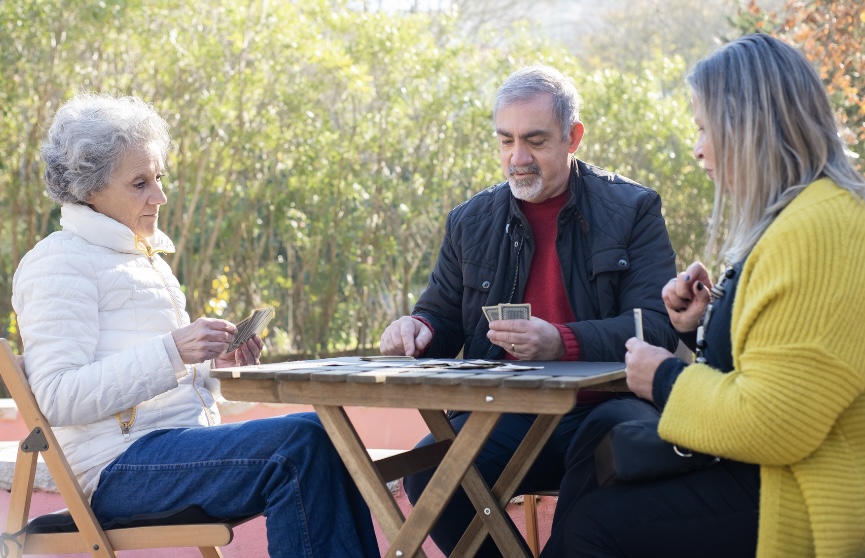
Laundry, board games, card games, gardening, organizing, dancing… What does your loved one love to do? Do you know what things bring light to their eyes or even spark conversation? And did you know you can advocate for those things in a memory care setting? In this post we will be talking about increasing your chances for a successful memory care move through activity.
If you’re reading this and you’re a family member looking for memory care, I believe you hold the key to helping this transition to memory care be successful. I believe that because you know your loved one best. I’m not even talking about caregiving…which you probably are doing some of that even if you don’t think you are or it’s not in an official capacity. What I’m talking about here is that you know those things that spark joy or calmness in your loved one. A successful memory care move could be as simple as communicating your mom’s favorite song or your dad’s favorite movie. But it doesn’t end there…you’re in partnership with the memory care community you find. They must be willing to take that information and incorporate that with their care of your mom or dad. If you’re reading this and you work in memory care, I challenge you to become curious about your residents, learning more about who they are and what they used to love.
There are many variables to consider when choosing a memory care community but in this post we’re just looking at this one area of activity.
When you tour a memory care community, just like assisted living they should show you their activity calendar. Here’s are some things you might find on a memory care activity calendar:
Music
Arts and Crafts
Singing
Painting
Exercise
Stretching
Balloon Toss
Baking
Brain games
Happy Hour
Reading
Gardening
Movies
The activity calendars are usually packed which is great! But you may already be saying to yourself well…my mom definitely wouldn’t like the arts and crafts activity or my dad doesn’t like to bake.
The most important part of this calendar and the question I want you to ask when you tour is…. What happens if the residents don’t want to participate? How does the staff handle this? Specifically, how? Are there staff members available to pivot if your mom doesn’t want to go to an activity? Is there an opportunity to add or change an activity to something your mom or dad does like to do? With most types of dementia, there will be times when your loved one may not be interested in an activity or want to participate at the time the activity is taking place.
I believe that a successful memory care activity program is more about pivoting and changing than it is about the actual calendar.
It’s about learning each resident’s likes and dislikes then tailoring the program to the residents. For example, not just music but specific genres of music and not just movies but specific types of movies. I believe this is also how it works in independent and assisted living but memory care will take even more advocating on your part.
If you know your mom loves singing hymns (and we’ve seen the research on music and memory) ,it’s ok to ask if they can add hymns to the days they have singing on the calendar.
If your mom loves weeding the garden but doesn’t know the difference between real flowers and weeds…can they garden with plastic flowers? If your dad doesn’t like to bake but loves to eat sweets…Can they add a taste tester to a baking activity?
If your dad was a mechanic and loves to tinker…can they add a simple building activity and if he’s the only resident who might like this…does that mean it’s your responsibility to do that activity with him or can the caregivers also do activities? If your dad loves action movies… It’s possible he’s not going to like the musical they have planned for movie night or soap operas playing during the day.
One of the top complaints we hear from families is that when they tour memory care, so often the residents are just watching TV and if there’s something on the TV that they feel their loved one wouldn’t like to watch… it’s ok to ask the question… Can they change the channel?
If there’s something like that musical playing that your mom or dad really hates? It could mean the difference between a good day or a bad day in memory care. If they’re required to sit through an activity that they don’t like? They may not be able to verbalize that they don’t like it but they sure might show it through their body language or even physically become combative.
Here’s the thing about cognitive impairment…it can change on a dime. What works today may not work tomorrow.
If you’re familiar with the blog and our company, you know that I worked in senior living and at one point in my career I worked in a memory care community.I’ll never forget the day that there was an activity that this gentleman normally loved…. He was normally a funny easy going guy but on this day? He didn’t want to leave his area to go to the active room. The caregivers were trying to get him to go and even I was like let’s go! It’s time for …whatever it was… and he stomped on my foot!!! He couldn’t verbally tell us he did not want to go but he sure showed us!!
Many memory care communities have programs designed to gather specific personal information about your loved one’s likes and dislikes and this is exactly what we’re talking about today. It can feel promising when they ask you these questions or have you fill out a form but how are they actually using the information? Are caregivers involved in the activities? How open is the community to changing or modifying their activities? Can your loved one say no if they’re not feeling up to it at that time? And does that mean they don’t get any stimulation that day?
One of the challenges of a memory care community can be the size of the community…how many residents they have… how many staff members… the different stages of dementia…some early and some more advanced. It can be difficult to meet individual resident needs and this is why it’s so important for you to advocate because finding that thing that brings joy to your loved one can make all the difference in the success of their memory care move.
If you’d like to check out our blog post in podcast form, be sure to take a listen HERE!
Click HERE for our Doable Download, which provides the resources referenced in the post.
Check out & subscribe to our YouTube page!